
In the ever-shifting landscape of modern menswear, it’s easy to get lost. The endless scroll of micro-trends and “must-have” items can leave a man feeling more anxious than authentic, constantly chasing a standard that changes with the seasons.
But true style isn’t about what’s fleeting; it’s about what endures. This is the central tenet of Bernhard Roetzel‘s “Gentleman,” an indispensable guide that cuts through the noise to focus on the philosophy of classic elegance.
This article distils the five most impactful takeaways from this seminal book. These are not rules for what to buy, but truths about how to be—lessons that redefine what it means to be a gentleman by looking beyond the clothes to the man himself.
1. It’s a Matter of Character, Not Class
The concept of a “gentleman” has undergone significant evolution from its historical roots. The term originated in medieval England, where it was an inherited title that served as a marker of noble birth within a rigid social hierarchy. It was something you were, not something you became.
Today, that definition has been rightly and powerfully democratised. A gentleman is now defined by his courteous and honourable behaviour, irrespective of social class or bank balance. This distinction is the very foundation of modern elegance. It reframes style not as an accident of birth, but as a conscious act of self-creation.
In a world often preoccupied with status, the ideal of a gentleman becomes an accessible and empowering pursuit for anyone. It confirms that your conduct, not your lineage, is what truly defines you.
With character established as the blueprint, the next step is to build the physical expression of that integrity—starting with a deliberate and well-considered wardrobe.

2. Focus on Quality, Not Quantity
Forget the overflowing closet and the anxiety of endless choice. A truly stylish wardrobe is not about having everything, but about having the right things. This philosophy serves as the ultimate antidote to the churn of fast fashion, advocating for a versatile and timeless collection built on a few essential, high-quality items.
According to “Gentleman,” these are the foundational items that form the bedrock of classic men’s fashion:
- The classic white dress shirt: The ultimate canvas, its value lies in a crisp, high-quality cotton that feels as good as it looks, with a fit that follows your form without constricting it.
- The well-fitted navy blazer: Unmatched in adaptability, it can elevate chinos or anchor a more refined ensemble. Its structure and fit are paramount.
- Perfectly tailored trousers: A custom fit provides a level of comfort and elegance that off-the-rack options cannot match, creating a clean, unbroken line from waist to shoe.
- The classic trench coat: Typically crafted from water-resistant gabardine, this is the epitome of functional and sophisticated outerwear, offering protection while enhancing your silhouette.
- Quality leather shoes: A pair of leather Oxford shoes is non-negotiable for formal settings. Well-made and properly cared for, they can serve you for decades.
- High-quality knitwear: Sweaters made from merino wool or cashmere offer warmth without bulk, providing sophisticated layering options for any occasion.
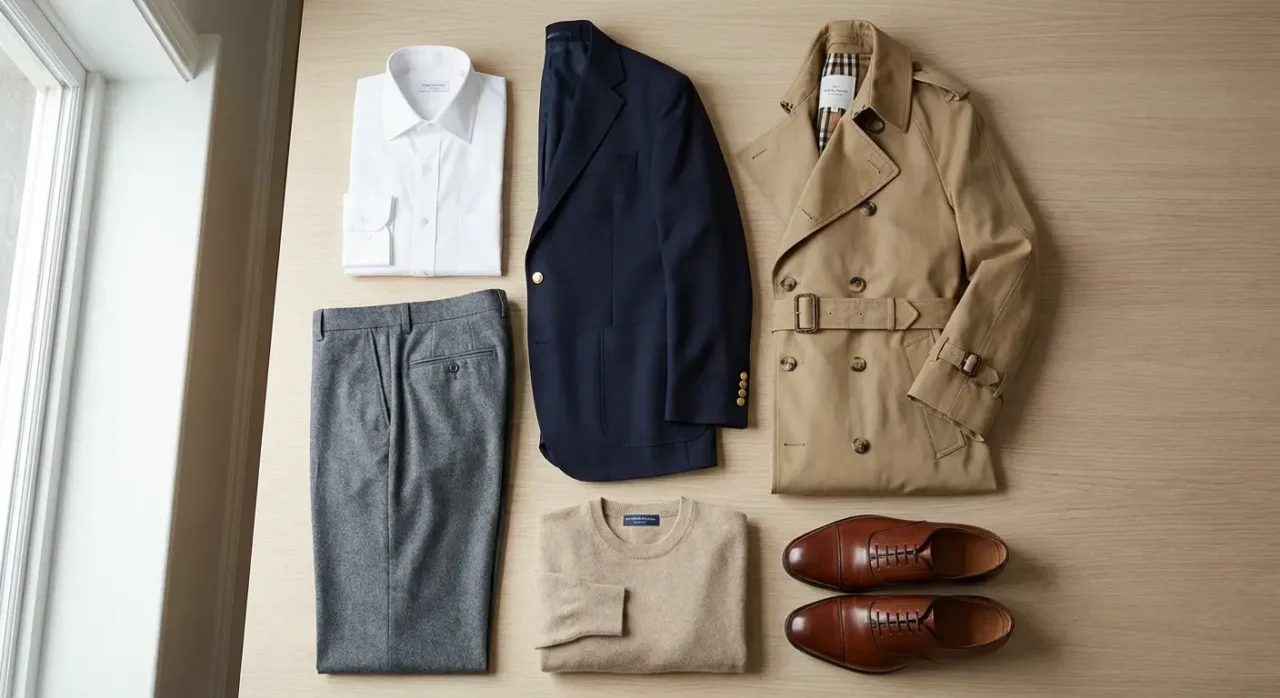
This curated approach is more effective for a reason. Investing in quality means garments that not only last longer—offering superior economic value over time—but also look and feel demonstrably better.
The superior drape of fine wool or the soft hand of premium cotton provides a quiet confidence that disposable fashion can never replicate. It frees you from the paradox of choice and helps build a more personal, sustainable relationship with the clothes you wear.
But even the finest clothes are diminished if they aren’t built upon a solid foundation. True style begins long before you put on your clothes.
3. Grooming Is the Foundation of a Polished Appearance
Personal care is the non-negotiable starting point of a gentleman’s presence. This behind-the-scenes preparation is what creates the polished finish that people notice, boosting both appearance and confidence from the ground up.
- Skincare: Healthy skin is the base for everything else. A consistent routine of cleansing to remove impurities, exfoliating once or twice a week to promote cell renewal, moisturising to maintain hydration, and using sunscreen to protect against damage is crucial for a vibrant, well-maintained complexion.
- Haircare: A hairstyle should be suitable for your face shape and hair type, and it should be maintained with regular trims to keep it looking its best. Just as important is using quality products sparingly. The goal is a natural finish, not a stiff, over-styled look that announces its presence.
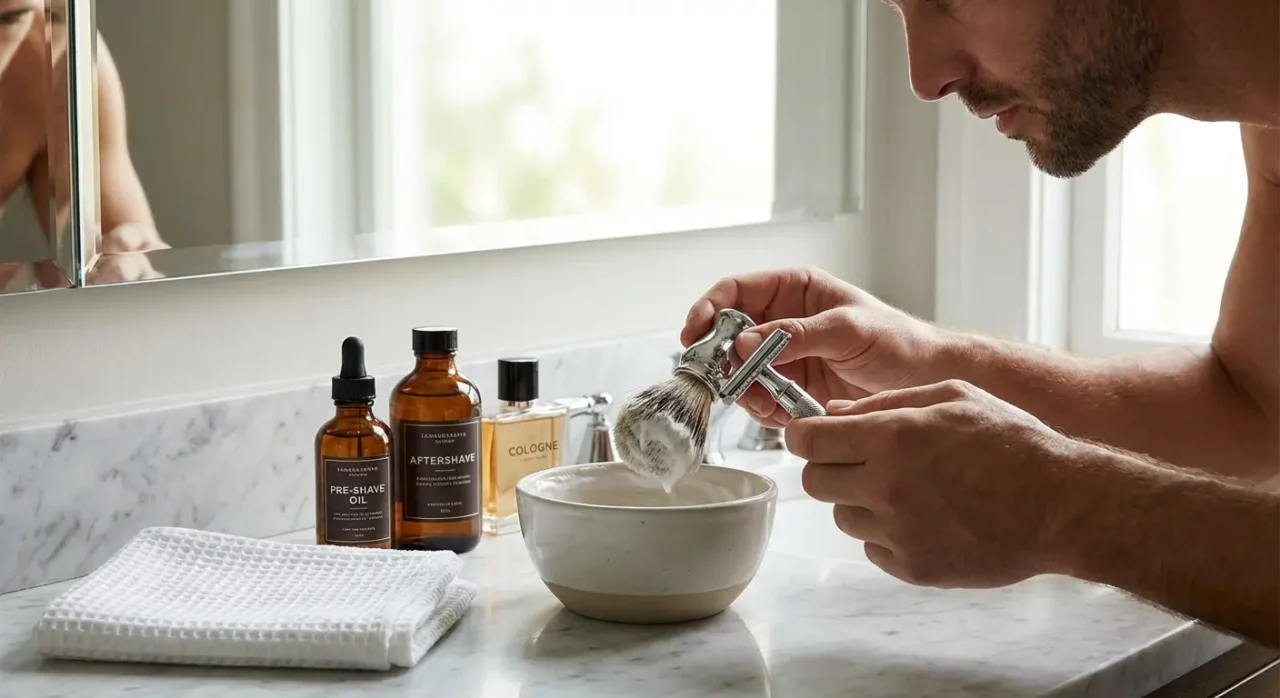
- Shaving: For those who shave, the traditional wet shave remains the gold standard for its close, smooth finish. Preparing the skin with warm water and using a quality shaving cream creates a protective barrier, reducing irritation. For men with facial hair, regular trimming and maintenance are essential to keep it looking neat and intentional.
- Fragrance: A gentleman’s fragrance should be a discovery, not an announcement. It should be subtle, applied to pulse points, and enhance your presence without overpowering the room. Moderation is the key to elegance.
The Finer Details: True grooming extends to the small things. Meticulous dental hygiene is a sign of respect for yourself and others, while clean, neatly trimmed nails are a non-negotiable detail that signals a man who is in command of his presentation.
Once this foundation is in place, the principles of elegance can be applied to every aspect of life, even on the days you aren’t wearing a suit.
4. Master the Art of Casual Elegance
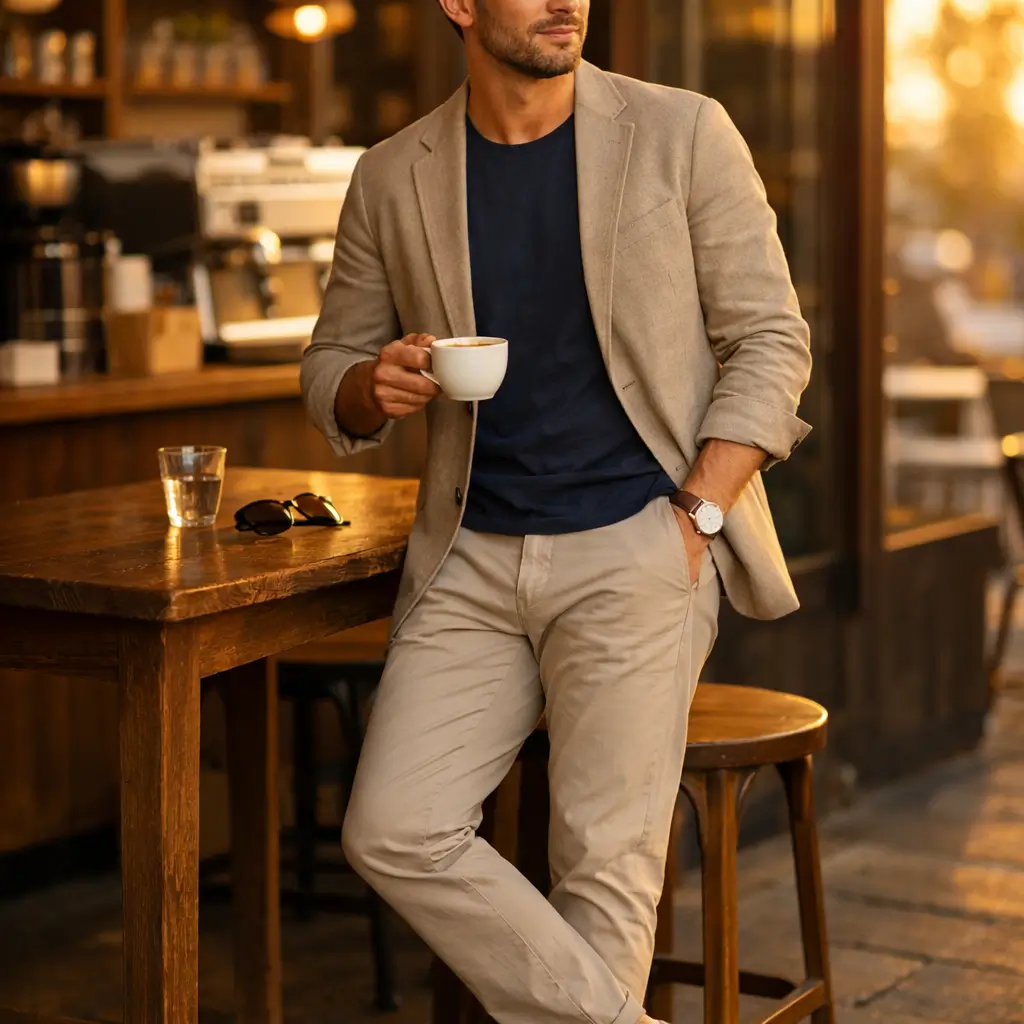
Being a gentleman isn’t reserved for black-tie events or boardrooms. The same principles of refinement apply to your everyday wear. This is the concept of “Casual Elegance“—the art of balancing comfort with sophistication, proving that “dressed down” doesn’t have to mean “letting go.“
You can achieve this look by investing in high-quality casual staples that are as well-made as their formal counterparts. This includes items such as:
- Unstructured cotton blazers that offer a relaxed yet put-together silhouette.
- Smart chinos in versatile, neutral colours like navy, khaki, or grey. As the book notes, a simple pairing like a navy blazer with light-colored chinos creates a pleasing contrast that is effortlessly stylish.
- Quality footwear that bridges the gap between formal and casual, such as leather loafers, desert boots, or clean, minimalist white sneakers.
Even a simple accessory, like a classic leather belt or a tasteful wristwatch, can elevate a casual outfit. It demonstrates an attention to detail that is the hallmark of a man who takes pride in his appearance, no matter the occasion.
This attention to detail in your appearance, however, is merely the prelude to the most important element of all.
5. Manners and Behaviour Complete the Picture
Ultimately, a gentleman’s style is incomplete without honourable conduct. As Roetzel’s guide makes clear, sartorial decisions are only half the battle; a man’s behaviour completes the essence of who he is. A beautiful suit on a rude man is like a magnificent frame on a cheap print. The behaviour is the masterpiece; the clothes merely frame it.
The fundamentals of gentlemanly behaviour are timeless: respect, the ability to foster good rapport, and effective communication.
These are the qualities that leave a lasting impression, long after the details of a well-chosen tie or a polished shoe are forgotten. Your clothes can make a statement, but it is your character and how you treat others that truly define you.

FAQ: “Gentleman” by Bernhard Roetzel
What is a gentleman, and how has this definition changed over time?
The term “gentleman” originated in medieval England to describe men of noble birth, as it was an inherited title within a rigid social hierarchy. Over time, this definition has undergone significant evolution and democratisation.
Today, a gentleman is defined by courteous and honourable behaviour, regardless of social class or background. The modern gentleman is characterised not just by what he wears, but by how he carries himself, interacts with others, and treats people with respect.
What are the guiding principles for building a gentleman’s wardrobe?
The three guiding principles are fit, fabric, and craftsmanship. These ensure that key pieces are elegant, sophisticated, practical, durable, and comfortable for any occasion. This philosophy emphasises quality over quantity—having the right things rather than having everything.
What are the essential pieces every gentleman should own?
The foundational wardrobe includes:
- Classic white dress shirt: High-quality cotton with a fit that follows your form without constricting
- Well-fitted navy blazer: Structured yet natural shoulder, lapel proportional to your frame, length that skims the hips
- Perfectly tailored trousers: Custom fit for comfort and elegance with a clean, unbroken line
- Classic trench coat: Water-resistant gabardine offering functional and sophisticated outerwear
- Quality leather Oxford shoes: Essential for formal settings, can last decades with proper care
- High-quality knitwear: Merino wool or cashmere sweaters for warmth without bulk
What’s the difference between single-breasted and double-breasted suits?
A single-breasted suit is considered the most versatile choice for various occasions. The double-breasted variant offers a more striking, bold appearance. The most versatile fabric for suits is wool, as it’s ideal for most climates and occasions.
Why should I invest in quality over quantity?
Investing in quality means garments that last longer, offering superior economic value over time, and look and feel demonstrably better.
The superior drape of fine wool or the soft hand of premium cotton provides quiet confidence that disposable fashion can never replicate. It frees you from the paradox of choice and helps build a more personal, sustainable relationship with your clothes.
Why is grooming considered the foundation of a polished appearance?
Personal care is the non-negotiable starting point of a gentleman’s presence. This behind-the-scenes preparation creates the polished finish that people notice, boosting both appearance and confidence from the ground up. Grooming contributes not only to a gentleman’s physical appearance but also to his confidence and overall presence.
What should a gentleman’s daily skincare routine include?
A gentleman’s daily skincare routine consists of four essential steps:
- Cleansing: Remove dirt, oil, and impurities
- Exfoliating: Once or twice a week to remove dead skin cells and promote cell renewal
- Moisturising: Maintain skin hydration
- Sun protection: Use broad-spectrum SPF sunscreen to protect against harmful UV rays
This consistent routine is crucial for maintaining a vibrant, well-maintained complexion.
How should a gentleman approach haircare?
A hairstyle should be suitable for your face shape and hair type, and it should be maintained with regular cuts. Use quality products sparingly—the goal is a natural finish, not a stiff, over-styled look that announces its presence.
What’s the proper way to wear fragrance?
A gentleman’s fragrance should be a discovery, not an announcement. It should be subtle, applied to pulse points, and enhance your presence without overpowering the room. Moderation is the key to elegance.
What was the major milestone in 19th-century men’s fashion?
The introduction of the modern suit was a major milestone. This event transformed men’s wardrobe expectations, leading to more refined tailoring where fit and fabric began to play crucial roles in the fashion industry.
What does it mean to be a modern gentleman?
Being a modern gentleman is a holistic pursuit—a journey of self-cultivation, not a shopping list. It involves not just what you wear, but how you care for yourself and, most importantly, how you carry yourself in the world.
It’s about character over class, quality over quantity, and behaviour over appearance. By embracing these enduring principles, you move beyond the endless cycle of trends and build a personal style that is authentic, timeless, and truly your own.
What makes Oxford shoes different from loafers?
Oxford shoes feature a closed lacing system and sleek design, making them essential for formal occasions and professional settings. Loafers offer a more relaxed yet equally polished option for less formal environments, providing versatility in a gentleman’s footwear collection.
Why are tailored trousers important?
Tailored trousers are customised to fit your specific measurements, ensuring comfort and elegance that off-the-rack options cannot match. They feature a well-constructed waistband and a refined drape, creating a clean, unbroken line from the waist to the shoe.

Being a modern gentleman is a holistic pursuit—a journey of self-cultivation, not a shopping list. It’s a concept that seamlessly intersects sophistication with substance.
It involves not just what you wear, but how you care for yourself and, most importantly, how you carry yourself in the world. By embracing these enduring principles, you move beyond the endless cycle of trends and begin to build a personal style that is authentic, timeless, and truly your own.
What one principle of the modern gentleman will you focus on incorporating into your life this week?


