
December 27, 2025 — You’re sitting in darkness. Your phone battery is dying. Outside, the wind howls like a freight train. This is what 170,000 people in Finland experienced when Storm Hannes hit.
This storm didn’t just knock out a few lights; it knocked out a significant number of them. It paralyzed entire regions. It forced rescue services to do something they rarely do: tell everyone to stay home.
What Are Storm Hannes’ Power Outages Doing to Finland Right Now?
Storm Hannes’ power outages have affected 170,000 customers across Finland. The storm hit hardest in the western and southwestern parts of the country. By 11 PM on December 27, entire towns sat in darkness.
You need to understand the scale. This isn’t a few neighborhoods. Whole municipalities lost power. Kristiinankaupunki. Närpiö. Maalahti. Vaasa. Every single municipality in South Ostrobothnia reported outages.
The Finnish Meteorological Institute recorded hurricane-force winds. The first major gust hit Sälgrund in Kaskinen. The storm intensified through the evening. Forecasters said it would peak before subsiding around 2 AM.
But the damage was already done. Trees fell on power lines. Poles snapped like toothpicks. Wires came down across roads. The infrastructure that keeps modern life running simply couldn’t handle the force of Storm Hannes.
The Geographic Impact
Storm Hannes’ power outages spread across multiple regions. The coast took the first hit in the early evening. Then the storm moved inland. South Ostrobothnia got hammered next.
By nightfall, the outages formed a pattern across the map. Southwestern Finland. Western Finland. Northern Finland. Central Finland. The Finnish Energy Industry’s electricity map lit up with red zones showing where the grid failed.
You might think storms hit coastal areas the worst. Usually, you’d be right. But Storm Hannes didn’t follow the usual pattern. It pushed inland with barely any weakening. The interior regions suffered just as much as the coast.
Why This Storm Hit Differently
Weather experts refer to this as an unusual storm track. The combination of high winds and heavy snowfall created perfect conditions for widespread damage. Trees already weighted down with snow couldn’t withstand the gusts. They toppled onto the power infrastructure.
The timing made everything worse. Late December means darkness falls early. Repair crews lost daylight hours quickly. Working in pitch black conditions with hurricane winds? Nearly impossible.

Storm Hannes Power Outages Hit Ostrobothnia: The Numbers Behind the Crisis
You need facts, not feelings. Here are the numbers that tell the real story of Storm Hannes’ power outages.
The Rescue Service Response
The Ostrobothnia Rescue Department logged 340 emergency tasks by 11 PM. That’s 340 separate incidents that require a professional response. In one evening. In one region.
These weren’t minor calls. Rescue teams dealt with:
- Trees blocking major roads
- Trees crushing power lines
- Multiple roads are completely impassable
- Structures damaged by falling debris
- Vehicles trapped by fallen trees
The storm hit Närpiö first around 6 PM. Within three hours, every part of Ostrobothnia reported emergencies. By the turn of midnight, the rescue service had tasks backed up in a queue. They couldn’t respond fast enough.
The Unprecedented Warning
Here’s what should alarm you: The Ostrobothnia Rescue Service told everyone to stay home.
Rescue services don’t issue this warning lightly. They exist to help people in emergencies. When they tell you to avoid calling them unless necessary, the situation is serious.
This recommendation means the system was overwhelmed. Too many emergencies. Too few responders. Too dangerous to send crews out for non-critical situations.
Power Company Reports
Vaasan Sähköverkko reported over 4,500 customers without electricity. That’s just one company. Caruna, another major provider, documented severe infrastructure damage:
- Broken utility poles
- Downed power lines
- Trees lying across the electrical infrastructure
- Equipment destroyed by wind and debris
Both companies increased standby crews. They anticipated problems. But nobody predicted damage on this scale.
The Human Cost
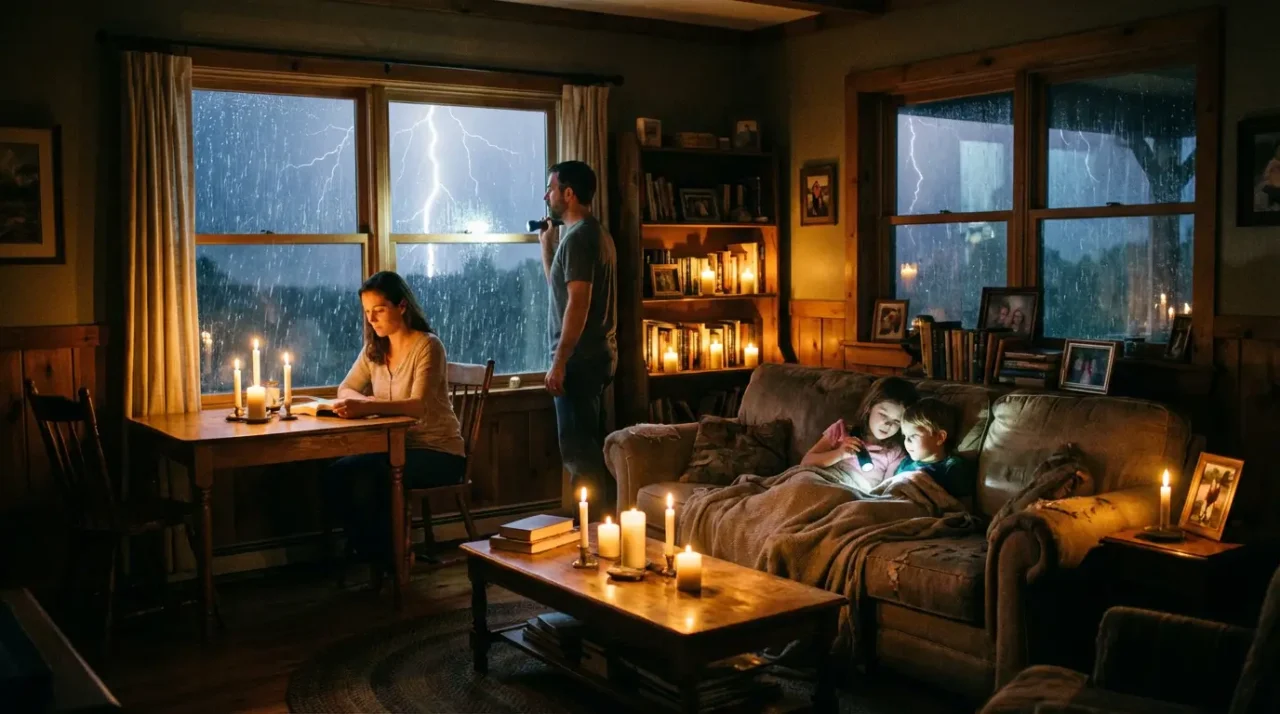
Behind every number sits a real person. A family without heat. An older adult without access to medical equipment. A parent trying to keep children calm in the dark.
Storm Hannes’ power outages meant:
- No heating systems in sub-zero temperatures
- No refrigeration for food and medicine
- No communication for isolated households
- No lighting in homes and on streets
Why Storm Hannes Power Outages Created 400 Rescue Missions in One Night
You might wonder how one storm generates nearly 400 rescue operations. The answer lies in how modern electrical grids work—and fail.
The Domino Effect
Finland’s power grid connects everything. One tree falls on a main line. That line feeds smaller lines. Those smaller lines power entire neighborhoods. One tree creates dozens of outages.
Storm Hannes knocked down hundreds of trees. Each one created multiple problems. A tree blocks a road. That same tree takes down a power line. The downed line sparks. Now you have three emergencies from one incident.
Rescue crews couldn’t focus on single tasks. They faced compound problems at every location.
Infrastructure Vulnerability
Your power reaches you through exposed lines strung between poles. This system operates smoothly under normal conditions. But Storm Hannes didn’t bring normal conditions.
The combination proved devastating:
- Heavy snow-loaded tree branches
- Hurricane winds pushed those branches
- Weighted branches snapped and fell
- Falling branches hit power lines
- Power lines pulled poles down
- Everything collapsed together
Modern Finland relies heavily on electricity for all its needs. When the grid fails, society comes to a standstill.
The Archipelago Problem
Islands and coastal areas face unique challenges during Storm Hannes’ power outages. Repair crews can’t just drive to the problem. They need boats.
But you can’t safely operate boats in hurricane winds. The sea becomes impassable. Islands stay dark until the weather permits boat travel. Even after the storm passes, waves remain dangerous for hours.
The Safety Equation
Here’s what rescue services weighed with every call: Is the danger of responding greater than the danger of waiting?
Sending crews out in hurricane winds risks their lives. Falling trees. Flying debris. Downed power lines. Icy roads. Zero visibility in snow squalls.
But waiting means people stay trapped. Roads stay blocked. Some emergencies can’t wait.
The rescue service made impossible choices all night. Which calls were critical? Which could wait? Who needed help first?
The Darkness Factor
Storm Hannes’ power outages came with another enemy: darkness.
December in Finland means the sun sets early. By 4 PM, daylight fades. Rescue operations and power repairs happen in complete darkness.
Working in darkness slows everything. You can’t see hazards. You can’t assess damage quickly. Simple repairs take three times longer.
Crews use lights and generators. But setting up lighting takes time. Time that could be spent actually fixing problems.


