
You stand in front of the mirror. You see a few nose hairs sticking out. Your first thought? Pull them out. Stop right there.
Doctors across America are sounding the alarm about nose hair removal. What seems like a simple grooming habit could land you in the emergency room with a serious infection.
Dr. Don Beasley, an ear, nose, and throat specialist from the United States, puts it bluntly: “The nose is a sensitive area with many blood vessels and mucous membranes.” When you mess with nose hair removal, you’re playing with fire.
What Is Nose Hair and Why Does Nose Hair Matter for Your Health?
Your nose hair isn’t there by accident. It’s not some cruel joke from nature. Those tiny hairs serve as your body’s first line of defense against a hostile world.
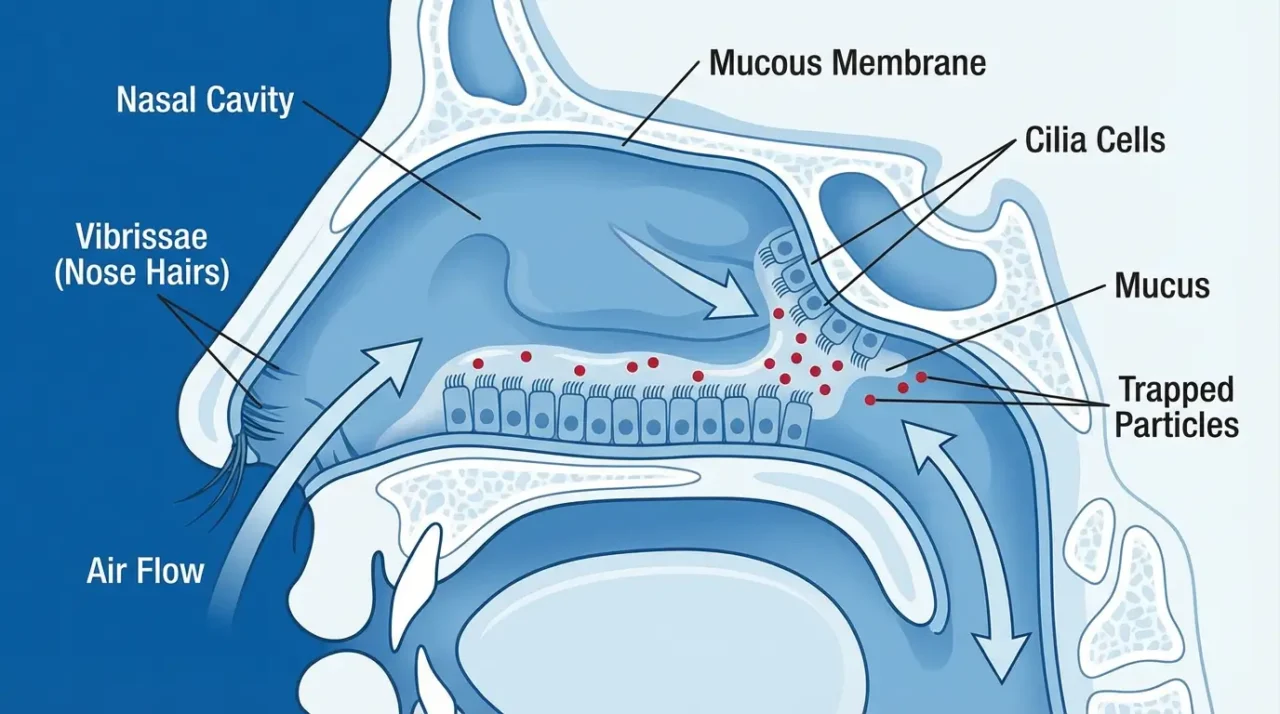
Think of nose hair as a living filter system. Every breath you take pulls in dust, pollen, and allergens. Your nose hair traps these particles before they reach your lungs. A thin layer of mucus coats each hair. When particles enter your nose, they get stuck on this mucus. You either sneeze them out or swallow them. Either way, they don’t reach your lungs.
Dr. Michael Jacobs, a board-certified dermatologist from New York, explains the mechanism: “The primary role of nose hair is to trap dust, pollen, and other airborne particles so that the air you breathe is partially filtered. The hair can act as a physical barrier to prevent allergens from entering the nasal passages and causing problems.”
But nose hair does more than filter. When something touches your nose hair—a small bug or other irritant—it triggers a reflex sneeze. Your body forcefully expels the intruder. This reflex protects you from breathing in harmful substances.
Nose hair also controls moisture. The hairs trap moisture from the air you exhale. This prevents your nasal passages from drying out completely. The moisture helps humidify the air you breathe in. Your respiratory system works better with moist air.
Remove all your nose hair, and you strip away this vital protection system. You leave yourself vulnerable to infections, allergens, and respiratory problems.
The Hidden Dangers of Nose Hair Removal You Need to Know
The statistics are alarming. Doctors report seeing more patients with nose infections directly linked to nose hair removal methods. The connection is clear and documented.
How Nose Hair Waxing Creates Openings for Infection
Dr. Nicole Aaronson, an ear, nose, and throat specialist, warns about the real danger: “While waxing doesn’t necessarily weaken the immune system, it penetrates the skin barrier by creating openings for bacteria to access deep tissues, thereby creating an opportunity for infection.”
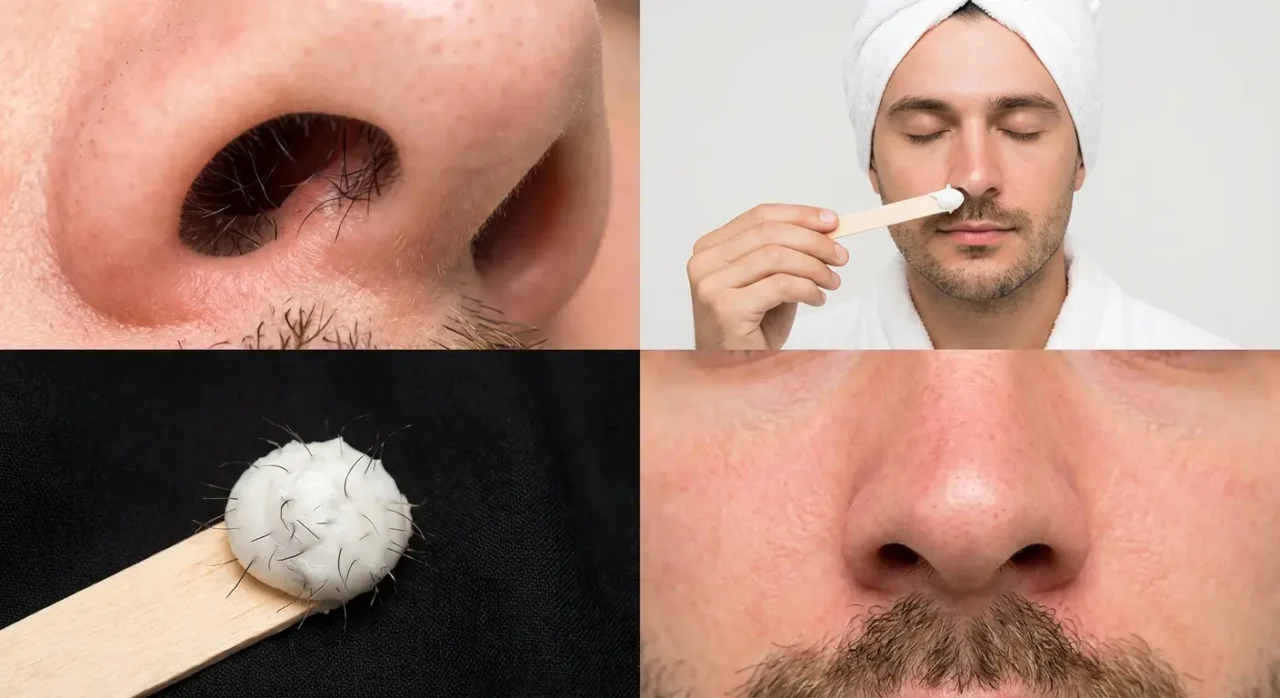
Here’s what happens during nose hair removal with wax. The hot wax sticks to your nose hairs. When you rip it out, you’re pulling hairs from their roots. This creates tiny wounds inside your nose. Each wound is an open door for bacteria.
Your nose contains millions of bacteria. Some are harmless. Some are dangerous. When you create openings through nose hair removal, these bacteria rush in. They reach deeper tissues that normally stay protected.
The result? Nasal vestibulitis. This infection inflames the inside of your nose. It causes pain, redness, and swelling. In severe cases, it leads to abscesses—pockets of pus that require medical drainage.
Hot wax carries another risk. If the temperature is too high, it burns the mucous membrane lining your nasal cavity. These burns create lesions. Lesions become infection sites. The cycle continues.
Why Nose Hair Plucking Leads to Painful Abscesses
Dr. Aaronson has seen the consequences firsthand: “I’ve observed that plucking nose hair leads to nasal abscesses.”
When you pluck nose hair, you’re yanking it from the follicle. This violent removal damages the follicle itself. The follicle can become infected. Bacteria multiply in this warm, moist environment.
An abscess forms when infection spreads. Your body tries to wall off the bacteria by creating a pus-filled pocket. But inside your nose, there’s limited space. The abscess presses against sensitive tissues. The pain becomes unbearable.
Plucking also causes ingrown hairs. After nose hair removal, new hair grows from the follicle. Sometimes this hair can’t break through the skin surface. It grows sideways under the skin instead. This creates inflammation, pain, and potential infection.
The risk multiplies if you use dirty tweezers. Bacteria on the tweezers transfer directly into the open follicle. You’re essentially injecting infection into your nose.
What Happens When You Remove Nose Hair Completely?
Complete nose hair removal transforms your nasal passages into an unprotected tunnel. The consequences affect your entire respiratory system.
Your Body Loses Its Natural Air Filter
Without nose hair, every particle you breathe goes straight into your respiratory system. Dust settles in your lungs. Pollen triggers stronger allergic reactions. Pollutants cause inflammation.
Studies show that nose hair significantly reduces the number of particles reaching your lungs. Remove the hair, and particle exposure increases dramatically. Your lungs work harder to expel these invaders.
People who undergo complete nose hair removal report more frequent respiratory infections. They catch colds more easily. Their allergies worsen. The connection is direct and measurable.
Nose Hair Protection Against Allergens Disappears
Your nose hair acts as a bouncer at a club. It keeps the troublemakers out. When allergens like pollen try to enter, nose hair catches them in mucus. You sneeze or swallow the trapped particles. Problem solved.
Remove your nose hair, and allergens walk right in. They reach sensitive tissues in your nasal passages. Your immune system overreacts. You experience worse allergy symptoms—sneezing, runny nose, itchy eyes, congestion.
For people with asthma, this becomes dangerous. Unfiltered allergens can trigger asthma attacks. Your airways constrict. Breathing becomes difficult. What started as cosmetic nose hair removal turns into a medical emergency.
The moisture control also disappears. Dr. Beasley explains: “Nose hair traps moisture from exhaled air and prevents nasal passages from drying out excessively. This moisture helps humidify the air we breathe, making it more comfortable for our respiratory system.”
Dry nasal passages crack and bleed. They become more susceptible to infection. The delicate balance your body maintains gets destroyed by aggressive nose hair removal.
The Safest Way to Remove Nose Hair Without Health Risks
You don’t need to live with nose hairs hanging out of your nostrils. But you must use the right method. Doctors agree on the safest way to remove nose hair.
Trimming Nose Hair vs Plucking: Which Method Wins?
Trimming wins every time. Here’s why.
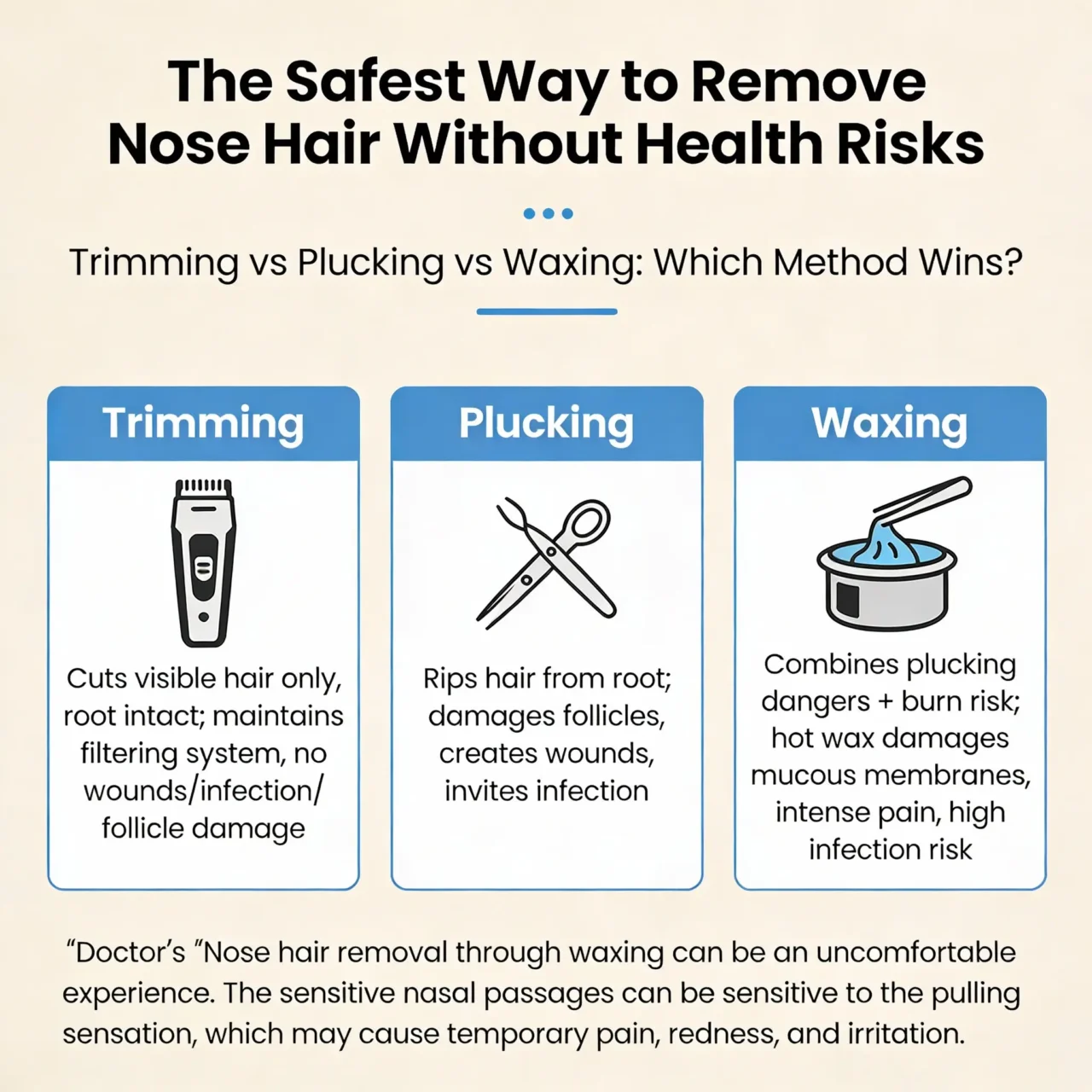
When you trim nose hair, you cut only the visible part. The hair remains in the follicle. The root stays intact. You maintain your filtering system while improving appearance. No wounds. No infection risk. No damage to the follicle.
Plucking rips hair from the root. It damages follicles. It creates wounds. It invites infection. The risk-to-benefit ratio makes no sense.
Waxing combines all the dangers of plucking with added burn risk. Hot wax can damage your mucous membranes. The pain is intense. The infection risk is high. Doctors universally recommend against it.
Dr. Beasley notes: “Nose hair removal through waxing can be an uncomfortable experience. The sensitive nasal passages can be sensitive to the pulling sensation, which may cause temporary pain, redness, and irritation.”
Trimming takes seconds. It’s painless. It’s safe. It achieves the same cosmetic goal without the medical risks.
Best Tools for Safe Nose Hair Trimming
You need the right tools for safe nose hair removal. Two options work well.
Clean eyebrow scissors: Small scissors designed for eyebrow trimming work perfectly for nose hair. Make sure they’re clean. Sterilize them with rubbing alcohol before use. Trim carefully while looking in a mirror. Cut only the hairs you can see extending beyond your nostril.
The key word is “clean.” Dirty scissors carry bacteria. You don’t want to introduce infection even through this safer nose hair removal method.
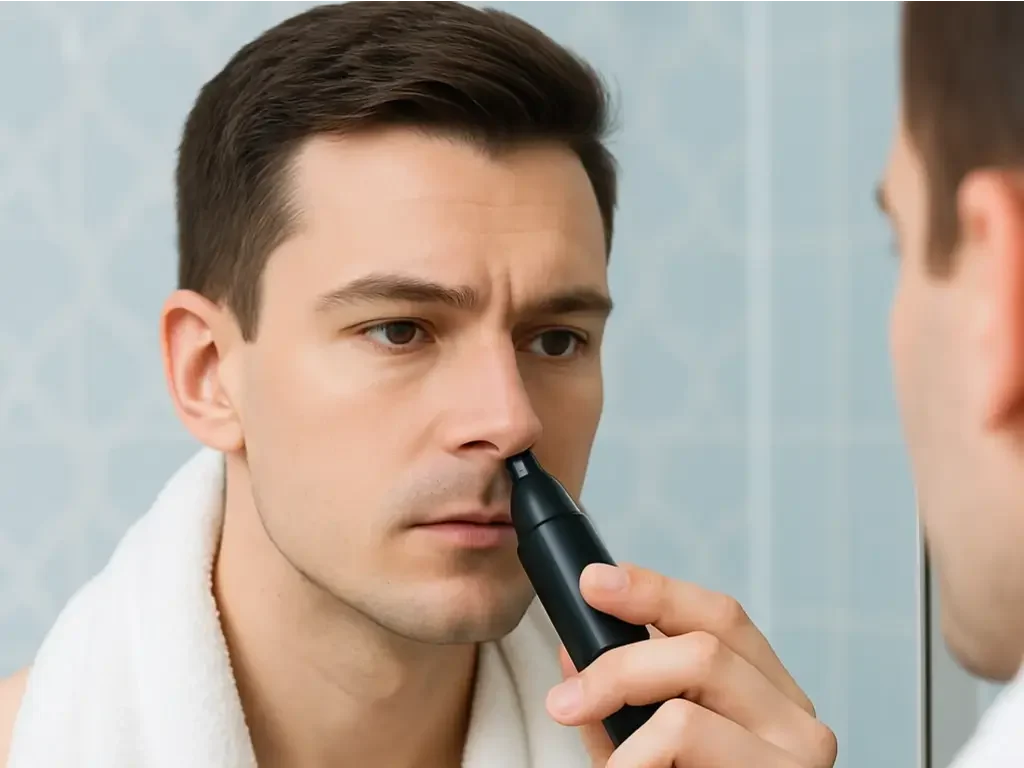
Electric nose hair trimmer: These devices are designed specifically for safe nose hair removal. They have rounded tips that prevent cuts. The rotating blades trim hair without pulling. Most models are battery-powered and easy to use.
Electric trimmers offer the safest way to remove nose hair. They’re fast, painless, and effective. The investment pays off in reduced infection risk.
Never use regular scissors. Their sharp points can stab the inside of your nose. This creates wounds that defeat the purpose of choosing a safer method.
Trim only when necessary. You don’t need perfectly bare nostrils. Trim the visible hairs. Leave the internal hairs alone. They’re working to protect you.
Common Nose Hair Removal Mistakes That Cause Infections
Even with good intentions, people make critical errors in nose hair removal. These mistakes lead to preventable infections and complications.
Hot Wax Burns Inside Your Nose
Waxing salons offer nose waxing services. They advertise quick results and smooth skin. What they don’t advertise are the burn risks.
The wax must be hot enough to remain liquid and stick to hair. But inside your nose, the mucous membrane is extremely sensitive. Skin that can tolerate wax temperature on your leg cannot handle the same heat inside your nostril.
When wax is too hot, it burns the mucous membrane. This tissue is thinner and more delicate than external skin. Burns create immediate damage. The burned tissue forms lesions. These lesions become prime sites for bacterial infection.
Dr. Aaronson warns that these burns increase infection risk significantly. The burned area cannot defend against bacteria effectively. Your body’s protective barrier is compromised.
Untrained technicians make the problem worse. They may not understand nasal anatomy. They apply too much wax or leave it on too long. The damage multiplies.
Some people attempt at-home nose hair removal with DIY wax kits. This is particularly dangerous. You cannot see inside your nose properly. You cannot control the wax temperature accurately. The risk of burns and injury skyrockets.