
Let’s be honest: “Fashion” can be a scary, confusing place. However, you can and should care about how you present yourself. This isn’t about attracting other people; it’s about expressing yourself and presenting an accurate version of who you are to the world.
Having the world see you as you want to be seen is just good for your mental health. It feels incredible. A barista told me I dress well two years ago, and I’m still thinking about it.
It feels so good, and I want that for you. That’s what this guide is for—a few easy-to-remember guidelines that will help you know for a fact that what you have on works.
1. Shape Is Everything (Seriously, It’s More Important Than Your Clothes)
The single most overlooked yet crucial part of an outfit is its overall shape, or “silhouette.” It’s so fundamental that the only real difference between a denim jacket and a pair of jeans is their shape. You can use the form of your clothes to highlight your best attributes and draw attention away from your less flattering ones.
For example, I have a broad torso and long, skinny legs. If I wear a big shirt with skinny pants, I look shorter, unbalanced, and frankly, kind of goofy—like a turkey leg at a renaissance fair. But if I flip the proportions to a smaller shirt and some baggier pants, it evens out my silhouette.
The change is more than just visual. When I was dressing like a turkey leg, I lived in an apartment and was single. Now that I dress like this, I live in a house, and I’m engaged.
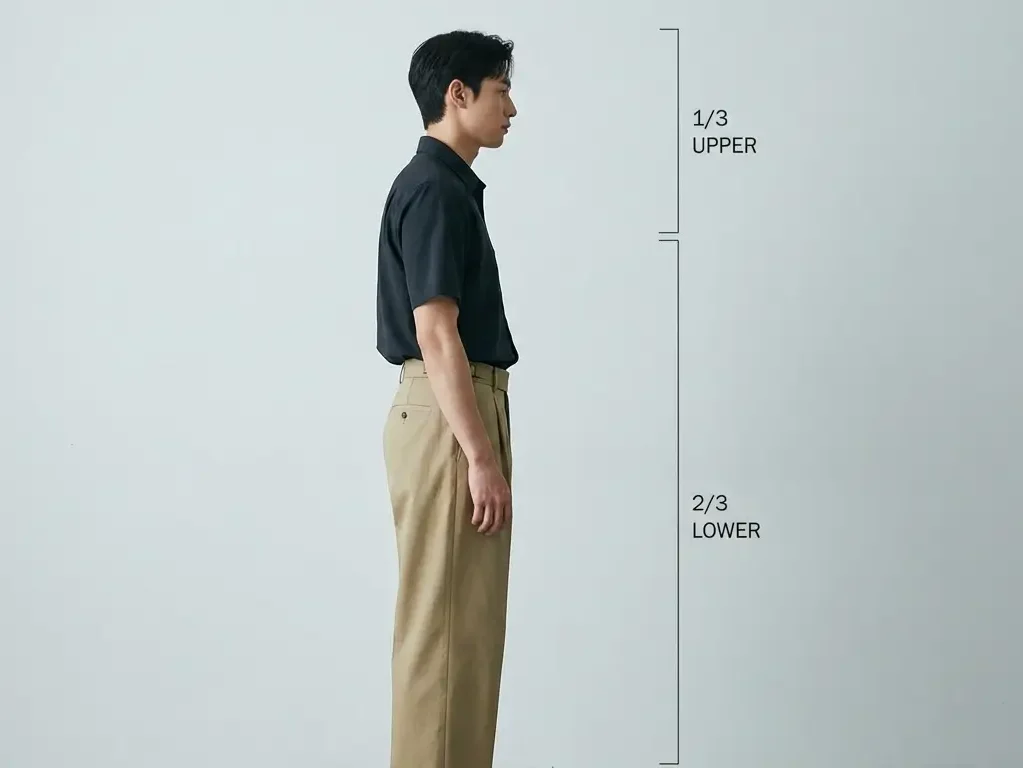
A practical way to apply this is with the Rule of Thirds. An outfit is often more visually appealing when your body is divided into a 1/3 top and 2/3 bottom, rather than a 50/50 split. A simple trick to achieve this is to pull your pants up a bit further than you might think you should.
2. Your Shoes Are 50% of Your Outfit
Shoes have the power to make or break an entire look. They can undermine a great outfit or elevate a simple one into something genuinely cool. As designer Rick Owens said:
Hair and shoes say it all; everything in between is forgivable as long as you keep it simple
For timeless advice, consider owning a pair of white canvas shoes, such as Converse (also known as Chucks) or Vans. They are incredibly versatile, fitting in everywhere from an “old money aesthetic” to a “punk rock aesthetic.” They suggest an effortless, have-a-good-summer vibe no matter the season. It’s a good idea to have both a clean pair and a dirty pair.
To elevate your style further, challenge yourself to find a pair of casual, everyday shoes that aren’t sneakers, like boots or loafers. And while guidelines are flexible, here’s a firm rule: do not wear sneakers with a suit.
The occasions where a suit is required are increasingly rare. Lean into it. Use the excuse to play dress-up and look like James Bond for a night. How many wedding pictures have been absolutely ruined because the groom and his buddies couldn’t leave the Jordans at home? A suit means a special occasion; show respect for it.

Colore “Hot SauColorle” for Using Colour
Think of colour like hot sauce: the right amount is amazing, but too much ruins the meal. While you can theoretically pair complementary colours (opposites on the colour wheel), it’s a risky move. You could very easily end up looking like you really, really, really like the Dolphins.
Safer, more harmonious looks often use analogous colours (colours that are next to each other on the colour wheel) or a monochromatic palette of varying shades of the same colour.
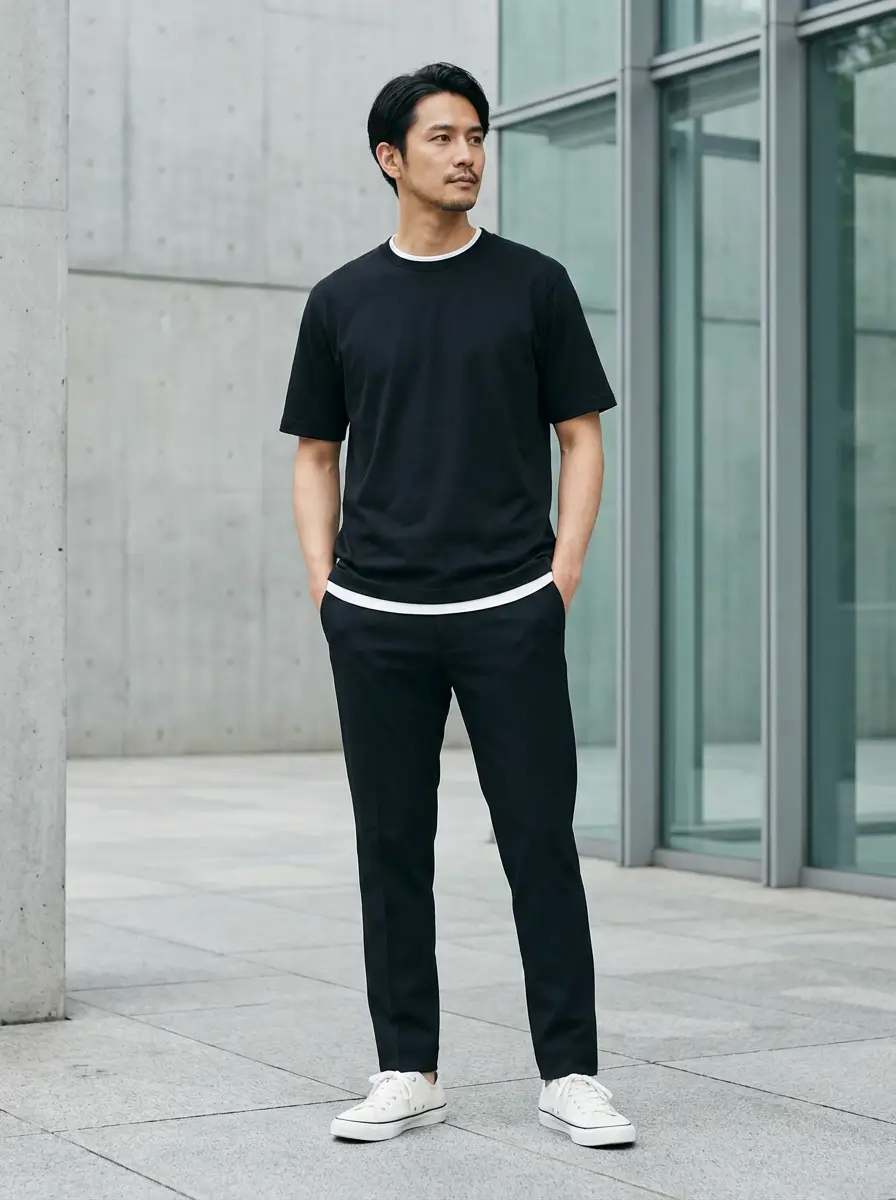
A monochromatic look is respectable, like an off-duty Power Ranger. A surefire way to build a great outfit is to start with a base of neutral colours and then add one “statement piece” as your dab Colort sauce.

Where you place that colour also matters. The Sandwich Method is an easy and effective technique. The rule is to match your top to your bottom and place a different colour in between. For example, you could pair light-coloured shoes and a light-coloured hat with a dark outfit in the middle to create a balanced, cohesive look.
4. “Personal Style” Is a Myth (Sort Of)
There is overwhelming pressure online to define your “personal style.” At its worst, this concept can feel like a scam, encouraging you to buy new things as trends shift constantly.
I’m here to tell you to focus on dressing well instead of dressing unique. Dress with intention, not for attention.
Personal style isn’t something you find; it’s something that emerges over time. Defining it too early is like defining a creative project before it’s developed—it limits what it can become. Start by recreating outfits you admire.
Work with the clothes already in your closet to see them in new ways. The personal element will come from you; your unique “handwriting” is what makes the style your own.
It’s like a nickname you can’t really give one to yourself; it just kind of shows up one day

5. The Ultimate Accessory Is Your Own Health
The final and most impactful guideline is this: health is the best accessory. No matter what you have on, it will look better if you look healthier. This isn’t just about being in shape, but about holistic health: being physically, mentally, and emotionally well—hydrated, adjusted, rested, and even well-moisturised.
It is very possible to dress well and still look like an absolute dog. Ask me how I know. The inverse is also true: a healthy-looking person can appear incredibly stylish in the simplest clothes. Taking care of yourself suggests you have a lot figured out, and that confidence is more compelling than any single piece of clothing.
This brings us to the heart of the matter. This isn’t about just feeling good; it’s about feeling good about ourselves. Feeling good all the time is impossible, but you can feel good about yourself even when you’re not feeling particularly good.
Taking these small, intentional steps—such as putting on a nice outfit—is our first line of defence against the overwhelming nature of the world.

A First Step, Not a Final Word
These guidelines are a foundation, not a set of restrictive rules. The goal is to use them to eliminate self-doubt and build the confidence that comes from presenting yourself intentionally. When you feel good about yourself, you are in a much better position to encourage others to feel good about themselves, too.
What’s one small change you can make this week to feel better about how you present yourself to the world?


